Here’s an uncomfortable truth: in many data rooms and equipment spaces, a fire sprinkler doing exactly what it’s designed to do can be just as destructive as the fire itself. Water damage to sensitive equipment leads to hardware failures, extended downtime, and in some cases, loss of insurance coverage.
So, what are your options? The answer has gotten more interesting in recent years.
Today’s data centers carry risks that didn’t exist at scale a decade ago. Higher equipment densities, more complex electrical infrastructure, and the always-on nature of modern operations mean there’s very little margin for error when something goes wrong.
Detect It Before You Have To Suppress It
The best outcome is stopping a problem before suppression is even needed. That means investing in early detection.
Aspirating/VESDA Systems continuously sample air through small tubes, detecting microscopic smoke particles well before any visible signs appear. These are now standard practice for data rooms.
Rack-level detection addresses a blind spot: fires can develop equipment cabinets before room-level systems notice anything
Suppression: Water-Based Options
If water-based suppression makes sense for your facility, the key is controlling exactly when and how water is released.
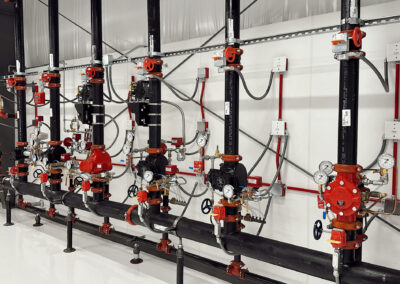
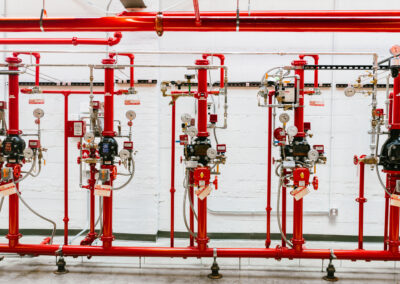
Pre-action and dual-interlock systems keep pipes dry until two independent triggers activate: a detection event and a sprinkler heard. This significantly reduces the risk of accidental discharge.
Water mist systems use ultra-fine droplets to cool fires and displace oxygen, using up to 80% less water than traditional sprinklers and causing far less collateral damage to equipment.
Suppression: Going Waterless
For the most sensitive spaces, removing water from the equation entirely is often the right call.
Clean agent systems, including FM-200™ and Novec 1230™, extinguish fires through heat absorption without leaving residue, damaging electronics, or requiring lengthy cleanup. They discharge in seconds and are compliant with NFPA 2001.
Inert gas systems reduce oxygen concentration in the protected space below combustion levels. They’re effective and environmentally benign, but dependent on a well-sealed room.
No Two Facilities Are The Same
The right system depends on your occupancy type, equipment value, budget, local codes, and insurance requirements. What’s universal is the value of a layered approach: early detection, the right suppression system, and ongoing maintenance by people who specialize in this work.
Want to learn more? Join us at our Virtual Lunch N’ Learn May 14, where we’ll dive deeper into fire protection options for water-sensitive spaces and answer your specific questions. Or reach out to our team directly. We’re always here to help.